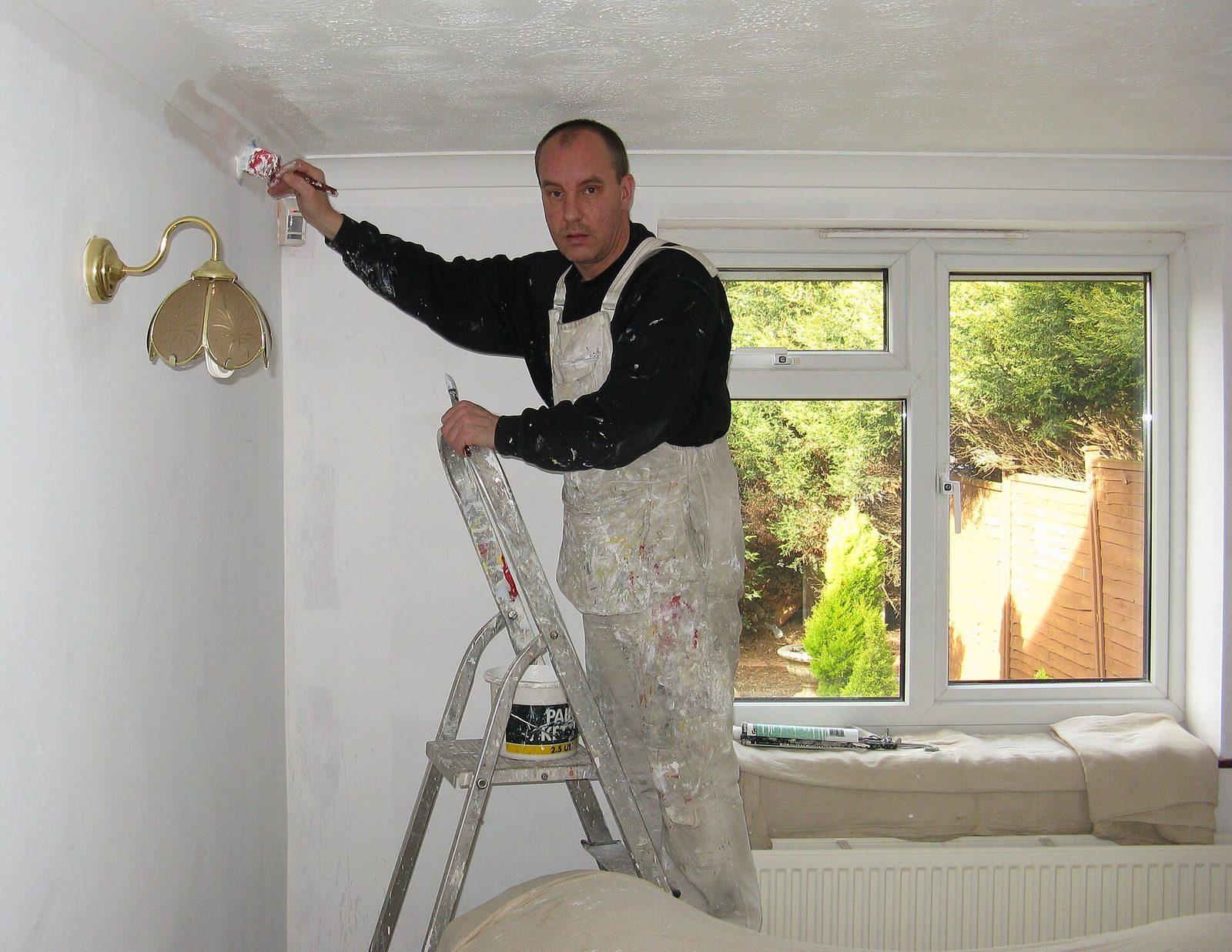
Ceilings, cornices and the Melbourne bungalow interior
Cracked cornices, nicotine white and the slow art of painting Californian bungalow ceilings in Frankston, Mornington and the inner Peninsula.
The Peninsula still has a deep stock of Californian bungalows and post-war cottages whose interiors are mostly ceiling and cornice. Stand in a 1920s Mount Eliza front room and the wall is almost secondary: a broad, slightly uneven ceiling, a run of plaster cornice, maybe a ceiling rose, maybe a later downlight punched through with more hope than planning. Painting that interior as if it were a 2018 townhouse is how you spotlight every sag.
This is the ceiling chapter of the interiors hub. Costs live in the per-room guide.
Ceiling paint is a product, not a thinner wall paint
Ceiling formulations are high-flat, high-hide, and designed to be rolled overhead without flashing every lap. They are not washable in the way a hallway low-sheen is. Do not use leftover wall tint on a ceiling because you have half a tin. The sheen will telegraph roller marks at afternoon angle, especially in west rooms that catch Port Phillip light.
Two thin coats beat one heavy coat. Heavy coats sag. Sagging ceilings in bungalows already have enough personality.
Nicotine, wood heaters and the stain-block step
Older Frankston houses often hosted smokers and always hosted a winter fire. The ceiling looks white until you put a new white next to it. Then it looks cream, then the tannin or nicotine bleeds. A stain-blocking primer — the shellac or dedicated acrylic blockers trades actually use — is cheaper than a third emotional coat of ceiling white.
If the house still has an open fire, mention it in the brief. Soot is not “a bit of dust”.
Cornices: hairline, structural, and the paint-as-glue mistake
Hairline cracks at cornice joints are the bungalow breathing. Scrape loose, flexible fill, paint. They may return. That is not always a painter’s failure. Long, stepped cracks that open every winter can be roof spread, settlement, or a former removal of an internal wall. Paint will not sister a rafter.
Never glob a rigid plaster compound across a live crack and sand it into a proud ridge. You have made a highlight for raking light. Cut it out, use a flexible paintable sealant where movement is expected, and accept a faint line over a lumpy scar.
Ceiling roses and decorative plaster need a brush, not a hopeful roller. Drips in the ornament become part of the architecture.
Downlights, roses and later holes
Every extra downlight is a ring that can flash if not sealed. Every removed pendant is a patch. Bungalow ceilings were not designed as a planetarium. If you are already painting, it is the moment to rationalise fittings with an electrician, then patch properly — not to paint around a galaxy of tired halogen cans.
Access, height and the ladder question
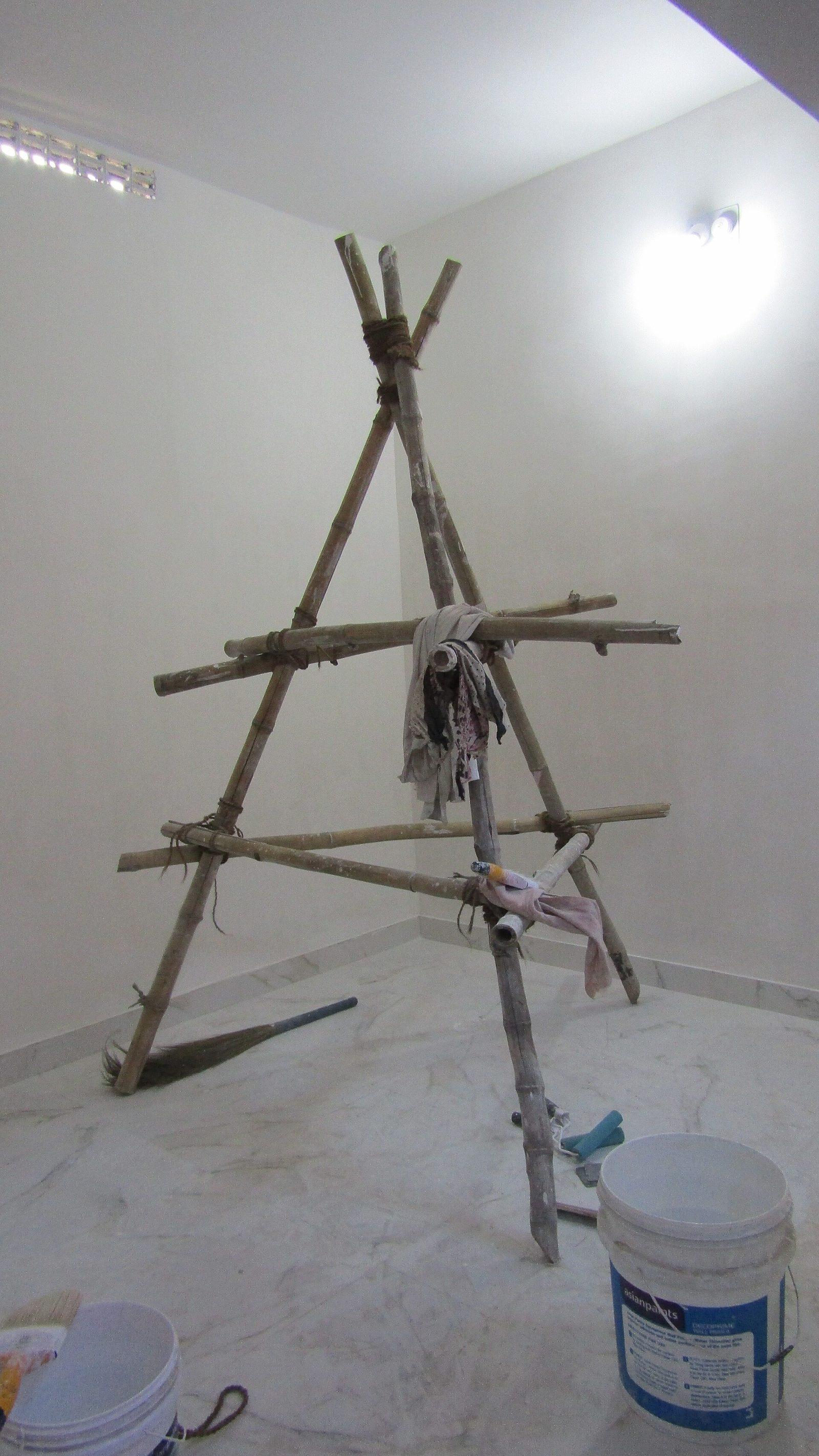
A standard 2.7 metre ceiling is a ladder. A raked Mount Eliza living room is a tower. Do not let a keen amateur stand a plank on two dining chairs. Interior towers have feet that love polished timber; specify protection. Height is priced. See also the scaffolding article for the two-storey void problem.
Colour: keep the ceiling quieter than the wall
Peninsula bungalows usually want a ceiling lighter than the wall, not a dramatic contrast that turns every crack into a drawing. A whisper of the wall colour in the ceiling can warm a south room without the “reverse feature ceiling” look that dated in 2009. Test at 2pm when the light is cruel.
If the cornice is to be the wall colour — a contemporary trick — budget more cutting-in. If it is to stay ceiling white, the line must be sharp or it will annoy you more than a slightly yellow old cornice ever did.
When the plaster is the story
Some bungalow ceilings have already been over-sheeted. Some are original lath and plaster that drums when you tap. Painting is not consolidating. If a section moves, get a plasterer. Painters who “tape and go” over failing lath are selling you a future blister.
A well-painted bungalow ceiling disappears, which is the point. You notice the window, the bay, the garden. That disappearing act is skilled overhead work, stain-blocking, and an honest conversation about cracks. It is not a leftover tin from the hallway.
Raking light and the 3pm inspection
Bungalow front rooms often have west or north-west windows that turn the ceiling into a diagram of every roller lap. Inspect at 3pm, not at 10am. If you can see a map, you need another thin coat, a better lay-off, or a flatter product — not a darker colour to “hide it”. Dark ceilings in period rooms are a fashion that makes the plaster look lower and the cracks look louder.
Insulation, downlights and new stains after the job
Painters are not roofers. If you add insulation or downlights after the ceiling is painted, you may get new lumps and new rings. Sequence trades. If a ring appears a month later, it may be a leak, not a failed stain-block. Get in the roof before you get angry at the white.
Hallways as a single plane
A bungalow hall is a long, narrow ceiling with a cornice that turns corners badly. Keep the same white throughout. Changing ceiling whites at a doorway because you ran out of a batch is how you get a ghost line forever. Tint enough. Write the batch on the lid.
When to call a plasterer first
Drummy patches, sagging sheets, cornice pulling away in long runs, water-soft sections: stop. A painter can glue a small rose. They cannot make a failing lath-and-plaster ceiling into a 2026 plane with a roller. Paying for plaster and then paint is cheaper than paying for paint twice.
The bungalow interior is a ceiling-first house. Get that overhead plane honest, then the walls are almost easy. Reverse the order and you will be cutting in forever around a cornice you already know is wrong.
People also ask
- Should ceilings be a different paint to walls?
- Usually yes. Ceiling paints are flatter to hide imperfections and are not formulated as a wipeable wall film. Use a ceiling-specific acrylic, then a wall low-sheen on the verticals.
- How do you stop cornices cracking after painting?
- You do not stop a moving house with paint. Flexible filling, addressing roof or foundation movement, and not gluing a rigid compound across a live crack are the real answers.
- Can you paint over water stains on a ceiling?
- After the leak is fixed, stain-blocking primer then ceiling paint. Painting water stains with ordinary white is how they return as sepia maps in the next cold snap.