Lead paint in pre-1970 homes — what Victorian owners need to know
Older Frankston and Mornington houses may still carry lead in gloss films. How to test, when to stop sanding, and how a repaint should be run under WorkSafe-minded controls.
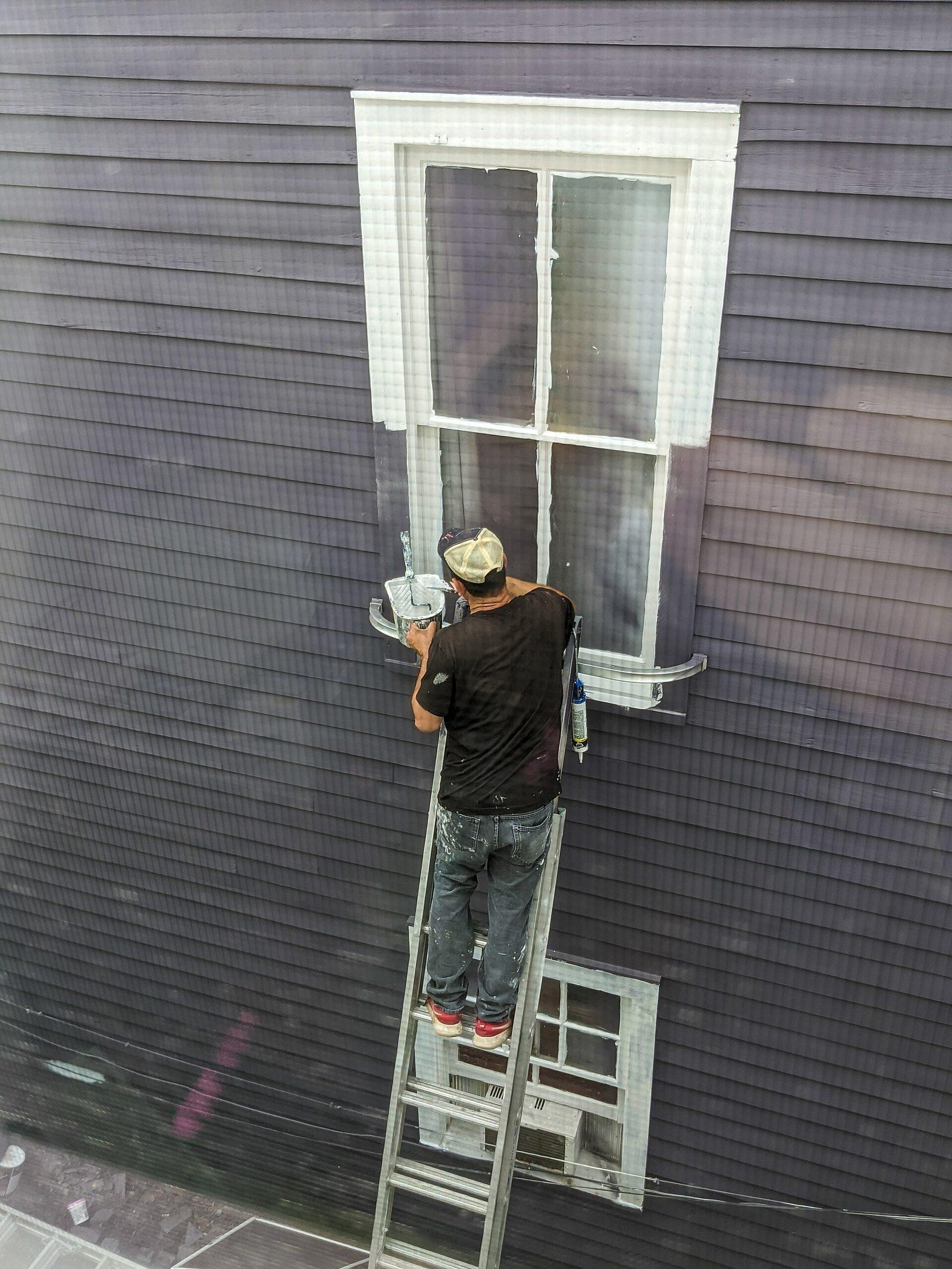
Plenty of Peninsula weatherboards were painted when dark gloss still meant lead. The film can sit quietly for decades under later acrylics, then announce itself as a fine dust the moment someone takes a dry sander to a sash. This is not a scare piece. It is the minimum an owner in Frankston, Mornington or Mount Eliza should know before a “quick sand” becomes a contamination story. WorkSafe Victoria and Commonwealth lead-paint guidance are the official voices; this is the domestic translation.
If you are only after colours, go back to the heritage or weatherboard guides. If you are about to make dust, stay here.
Assume lead on old gloss until proven otherwise
High-risk places:
- Exterior eaves, fascias, barge boards in dark old colours.
- Window sashes and doors that still have a brittle, thick film.
- Verandah floors and handrails.
- Interior woodwork in houses built before about 1970, especially if never fully stripped.
Later acrylic over the top does not delete the layer underneath. It hides it until you cut through.
Testing, without false comfort
Swab kits and 3M-style testers are a start on a particular patch. They miss layers. They miss the eave you did not test. For a renovation that will disturb a lot of film — especially with children or a vegetable garden below — a competent assessor is proportionate. For a spot-prime job on an otherwise sound wall, a targeted test plus conservative methods may be enough.
Do not eat lunch on the sill you just sanded, regardless of the kit.
What not to do
- Dry sand or dry scrape large areas of suspect film.
- Use a heat gun hot enough to fume. Lead fumes are not a DIY vibe.
- Open-blast with a high-pressure washer that turns paint into a mist over the garden.
- Bag nothing. Household rubbish is not automatically the right stream for lead flakes; follow local council and EPA advice for painted-waste.
A sensible method is wet sanding or chemical/mechanical methods designed for lead, containment (plastic, not hope), HEPA vacuum, wash-down, and disposal as advised. Painters who do this work should be able to describe it without smirking.
Encapsulation versus removal
If the old film is sound, well stuck, and not on a friction surface, a thorough wash, a suitable primer, and a new system can encapsulate. Windows that slam, doors that rub, and already-peeling eaves are poor encapsulation candidates. Removal is messier and sometimes correct.
Never encapsulate over active peel. You are gluing a future flake.
Quotes should say the word
If the house is old, the quote should mention lead as a possibility and a variation path. “Sand all timber” on a 1952 Seaford weatherboard without a method is a red flag. See what a quote should include.
Children, soil and the vegetable bed
Lead dust settles. It does not respect your raised garden. If you have stripped windows above a play area, treat the soil conversation as part of the job, not as a later wellness project. Washability of hands and toys is not a substitute for not making the dust.
After the new paint is on
Keep a note: year, product, and that lead may remain underneath. The next owner, or you in 2036 with another sander, needs that sentence. Encapsulation is a truce, not a detox.
Victorian owners do not need to panic about living in an old house. They need to stop treating a sander as a harmless weekend toy. The bay will still be there after a slower, wetter prep. The garden will be cleaner too.
Occupied renovations with children
If the house is lived in, isolate the room. Plastic is not theatre; it is the point. Sleep elsewhere if you are stripping windows. Wash work clothes separately. Do not dry-sweep. A HEPA vacuum is a tool, not an optional wellness purchase. Painters who do this regularly will look slightly boring and slightly slow. That is the correct look.
Tenants need written notice and a plan. Landlords who sand a row of sashes between tenants without controls are not saving a week. They are moving dust into the next family’s life.
Selling, buying and the disclosure instinct
You may not have a legal essay’s worth of paint history. You often have a memory of “Dad sanded the eaves in 1994”. Write it down for the buyer anyway. A competent building inspector may flag deteriorating paint; they will not always say the word lead. Budget a conservative method in your renovation numbers so the first quote that does say the word does not feel like an ambush.
On purchase, a cheap weatherboard with perfect gloss in a 1950s colour is not a bargain if your plan is to strip it for a coastal grey. The strip is the job. The grey is the souvenir.
Painters who will not say “lead”
Some will not because they do not know. Some will not because they do not want the variation. Neither is a reason to hire them for a 1952 Seaford cottage. Ask: “How do you handle pre-1970 gloss?” The answer should include testing or assuming, wet methods, and waste. If the answer is “we just sand it, she’ll be right”, she will not.
Lead is a process constraint, like height and salt. Price it, schedule it, and then pick the colour. The other way around is how a pretty sample pot becomes a messy month.
Pets, vegetable beds and the wash-down
Keep animals off the drop sheets. Wash vegetables you would have washed anyway, and do not harvest from soil you have just dusted. A hose-down of hard paths at the end of the day is part of containment. If that sounds like too much for a weekend, it is too much for a weekend — which is the point of hiring a method, not a sander. Slow is the safety equipment you already own.
People also ask
- When did Australia ban lead in household paint?
- Lead was phased down through the late twentieth century, with high-lead interior pigments restricted earlier and remaining uses tightened over time. As a rule of thumb, treat pre-1970 films — especially dark exterior and interior gloss on timber — as lead until a test says otherwise.
- Can I paint over lead paint?
- Encapsulation with a sound, well-adhered system is sometimes appropriate if the film is intact. If it is peeling, friction-prone (windows, doors), or you planned to sand it back, you need a controlled method, not a weekend sander.
- How do I test for lead paint in Victoria?
- Use a recognised test kit or, better, a qualified assessor for a house you plan to strip. Kits have limits. A negative wipe on one sill does not clear the eaves.