Surface preparation — washing, scraping, filling and priming in the right order
Paint fails in reverse order of skipped steps. The Peninsula sequence for washing salt and chalk, scraping failed film, filling, and priming before any colour goes on.

Every failed exterior between Seaford and Mornington has a skipped step in its biography. The colour was fine. The order was not. Preparation is not a personality type. It is a sequence: wash, diagnose, scrape, fill, prime, then paint. Reverse any two steps and you can still get a pretty handover. You will not get a film that lasts.
This is the spine of the preparation hub. Substrate-specific notes live in weatherboards, enamel and mould and salt.
1. Wash as if the wash were a coat
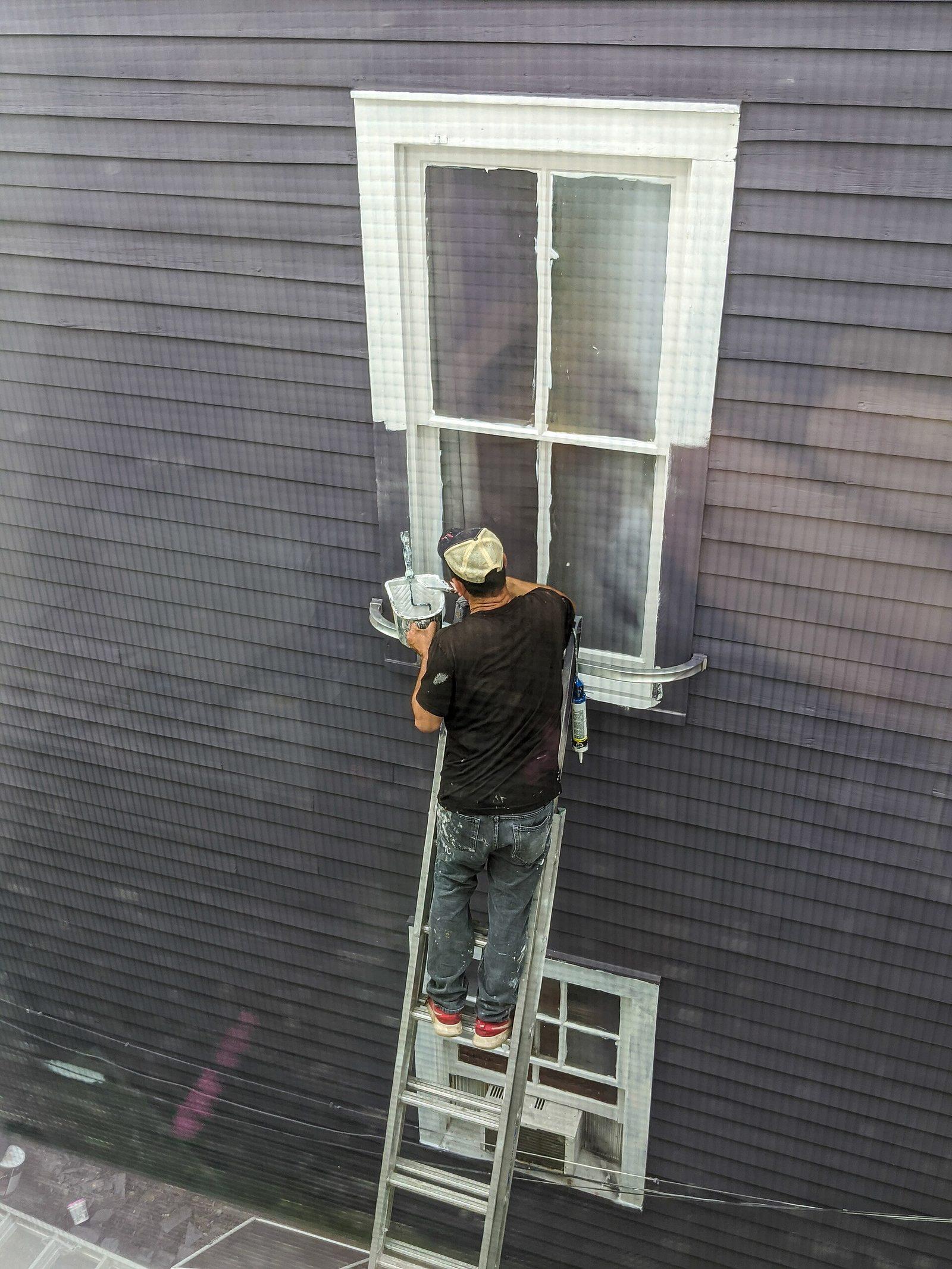
House-wash, the right dilution, a brush in the corners, a rinse that actually rinses. On the coast, you are removing salt as much as dirt. On interiors, you are removing grease and nicotine. High-pressure close-up on old timber raises grain and drives water into laps. Soft and thorough beats dramatic and stupid.
If the sponge comes away white, you have chalk. Washing may be enough; a binding primer may still be needed. If the sponge comes away green or black, you have biology — kill, rinse, dry, then decide.
2. Diagnose before you scrape the whole house
Peel in one patch under a window is a leak until proven otherwise. Peel on every bottom edge is weather and skipped edges. Peel in sheets on a sunny wall is often enamel under acrylic or contamination. Scrape a small area, look at the back of the flake, look at what is left on the wall. The diagnosis article is the field guide.
Painting is not how you find a roof leak. Stopping is.
3. Scrape and sand what has failed, not what is merely ugly
Failed film has to go until you have a firm edge you can feather. Sound film can stay. Stripping a whole weatherboard house to bare timber because a television carpenter did it is how you create a priming epic and a lead event. See lead paint before any enthusiastic sanding on a pre-1970 gloss.
Feathered edges are the difference between a lump that telegraphs through two topcoats and a repair you cannot find.
4. Fill and caulk with products that can move
Timber filler on timber, flexible sealant where boards meet windows, masonry fillers on masonry. Do not fill a moving crack with a rigid compound and then act betrayed when it opens. Sand fillers flush. Prime fillers that the data sheet says to prime — many water-based fillers are thirsty and will flash if you skip it.
5. Prime for the substrate you actually have
Bare timber, tannin, chalk, galvanised metal, new plaster, old enamel, cement sheet: these are different primers. “One more coat of the wall colour” is not a primer. Spot-prime the bare patches on a sound wall. Broad-prime a chalky or glossy one. Record the primer name on the job sheet so the next cycle does not guess.
6. Then, and only then, the two topcoats
Keep a wet edge. Paint the edges that fail first — weatherboard bottoms, sills, the weather side. Recoat within the window. Do not apply a fat single coat because the afternoon wind is coming up. Film thickness is built.
Interiors follow the same logic
Degrease kitchens. Stain-block ceilings. Fill plaster. Sand enamel. Prime. Then colour. Occupied houses tempt people to skip wash because the furniture is in the way. The grease does not care about the furniture.
How this should appear on a quote
A line that says “prep, prime, two coats” is the minimum. A line that names wash, scrape, primer and topcoat is a quote. See the quoting checklist. If prep is a lump sum that looks too small for a peeling coastal weatherboard, it is too small.
Order is the cheapest insurance on a Peninsula house. Colour is what you remember. Order is what you do not have to remember in year four.
Masking is preparation too
Tape on a dusty sill is tape on dust. Wash first, then mask. Remove tape when the film can stand it — too early and you pull a fresh edge; too late on cheap tape and you bake the adhesive into a coastal grey. On exteriors, paper and plastic become sails. Weight them. A northerly will show you every unweighted drop sheet.
Do not mask plants by cooking them under plastic for a week. Shade cloth and a wash-off are kinder.
The sample patch as a prep test
A 400 millimetre square that goes through the full sequence — wash, scrape if needed, prime, two topcoats — tells you more than a conversation. If the patch peels, the specification is wrong. If it holds, you have a method to price. Do this on the worst wall, not the sheltered patio.
Primers that are not optional “if we have time”
Chalk binders, enamel adhesion primers, tannin blockers, galvanised etch coats, plaster sealers: each is a named product. “We’ll just use the wall paint a bit thinner” is not in AS/NZS 2311. It is in the folklore of jobs that return.
Write the primer on the wall with a pencil if you have to, then photograph it. The topcoat will hide the writing. The archive will not hide the mistake if you skip it.
Drying is a step
Fillers need dry time. Wash needs dry time. Primer needs dry time. Peninsula humidity makes liars of optimistic afternoons. If the schedule cannot hold dry time, the schedule is wrong, not the chemistry. That is a calendar problem as much as a prep problem.
When owners ask why a five-day job became eight, the honest answer is often “the wall was wet” or “the enamel needed more sanding”. Those are prep answers. They are also why the cheap quote assumed a fantasy house.
People also ask
- Do I need to wash a house before painting?
- Yes, especially on the Peninsula. Salt, chalk, cobwebs and cooking film are release agents. Painting over them is how new coats let go.
- Can I just spot-prime the bad bits?
- If the rest of the film is sound and de-chalked, yes. If the wall is powdery or the old enamel is glossy, you may need a broader primer. Guessing is cheaper than a test patch, until it is not.
- How long after washing can I paint?
- When the substrate is dry enough for the product — timber especially. A wall that feels dry on the face can still hold water in the laps. Peninsula mornings lie.